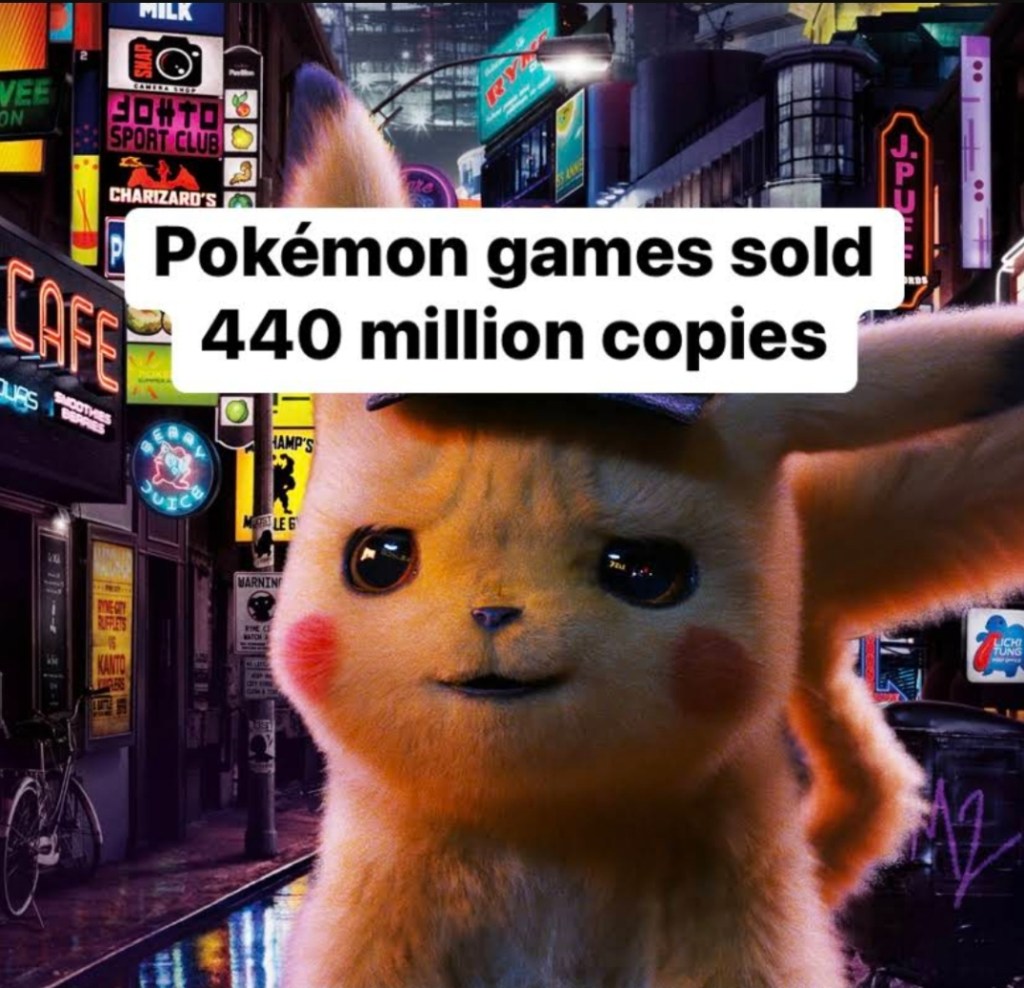
Pokemon Franchise And It’s Key Factor
440 million copies of Pokemon games have been sold.
31 million copies were sold of the original games, Red, Blue & Green.
24 million units were sold of the previous generation, Sword & Shield.
One unique thing about Pokemon versus other franchises is since the first game, they’ve always made the exact same game, but repackaged it with a different title, calling one game something like “Red” and the other something like “Blue”.
The model has worked, where with small changes, they’ve managed to get some kids to convince parents to purchase both games, even if the same.
Never actually looked at this until recently, but noticed for each generation, there’s actually a slight gap in sales per generation.
Pokemon Games Sold- Genration Wise
Pokemon Blue sold 5.02 million copies in the United States.
Pokemon Red sold 4.83 million though.
Same exact game, but there was a 200,000 copy gap between the two. Also, was shocked by that seeing how Red had the noticeably more popular Charizard as a mascot.
Looked over at each generation and was a little shocked.
Pokemon Silver sold 3.85 million copies.
Pokemon Gold sold 3.75 million copies.
Pokemon Ruby sold 2.84 million copies.
Pokemon Sapphire sold 2.76 million.
Pokemon Diamond sold 1.01 million copies release month.
Pokemon Pearl sold 712,000.
Pokemon Black sold 1.3 million copies.
Pokemon White sold 1.2 million copies.
Pokemon X sold 1.6 million copies.
Pokemon Y sold 1.5 million copies.
Pokemon Sun sold 808,000 copies.
Pokemon Moon sold 783,000 copies.
Pokemon Sword sold 499,000 copies first week in Japan.
Pokemon Shield sold 347,000.
Which to be clear, minus Sword & Shield, these are all early sales numbers in the US, but question is with each generation, what was the factor in sales gaps?
Why Pokemon Blue Sold More Then Pokemon Blue
Pokemon Blue had an edge over Pokemon Red for two reasons.
Reason One-Graphics
During the days of the GameBoy Color, games were extremely limited in the amount of colors which could be produced. The reason was largely battery life issues, where the original Game Boy came out in 1989 and they’d wait nearly a decade for 1998 to introducing Game Boy Color. They watched Sega and other companies fall with more powerful handheld consoles, due to price issues/battery limitations.
Game Boy color still wasn’t perfect, which part of the gap between Pokemon Red and Blue was shading. Blue had a thicker shading during the battles, which made it easier to see and that gave it an edge with consumers.
Reason Two-Kids like blue
Found this on Psychology Today, but they cited a study with 300 kids ages 8-13, finding with boys and girls, blue was the most popular color. It also was for the study apparently in the top 3 colors for every child asked.
Red is really popular with kids, but not as big with boys. So even Pokemon Red having a fire breathing dragon as the mascot, the red color still had kids prefer the game with the turtle mixed with a tank as the mascot.
That was generation one, but it gets a bit simpler going from generation to generation.
Pokemon Silver outsold Gold, because of the movie, Pokemon 2000, which came out in Japan in 1999 and in the US in 2000.
That movie featured the Pokemon Lugia as the main focus, which was the mascot to Pokemon Silver. That gave it a lead over Gold.
Pokemon Ruby
Pokemon Ruby was the first time a warmer color beat the colder color in sales. That one had one of the smallest gaps, with under 100,000 units at launch. The reason for that came down to mascot, where one featured this lava Godzilla type monster, where the other had a sea monster. Not a huge deal, but that gave it a consumer edge, mainly with boys.
Diamond and Pearl had the biggest gap at launch in sales. This one, I tried to find a big reason on, but really couldn’t. It seems like even with kids, they’ll take diamonds as a best friend over pearls. The mascots were fairly similar and no gaps on the anime, movies or marketing here.
Which after that, the rest of the games hold similar.
Very very minor sales gaps, but largely just due to things such as people liking the letter “X” more than the letter “Y” or swords over shields.
the overlap in sales is insane, where despite almost no difference, owning both games as a kid is sort of the symbol of growing up upper middle class. It also was a pretty genius movie for Nintendo, being able to sell 10-20% more copies per game, just via a different title and minor changes that probably are not even 1% of the budget.
Nothing here is a huge lesson, but does show how little things impacted the choice for consumers as kids and probably will with this franchise going forward.
 SepratX